Phyoe Thaung
Jun 15, 2026
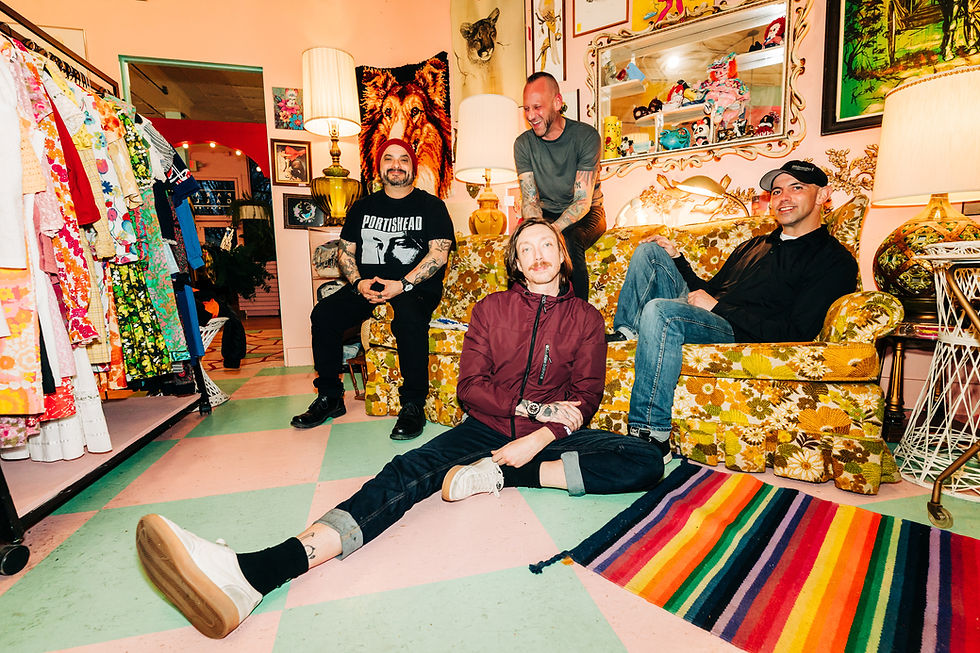
ME. discuss the collaborative process behind ALL GOOD THINGS, a debut album built without hierarchy, expectations, or a desire to recreate the past. In conversation with Uncut Collective, Eddie Reyes and Mike Jansen reflect on songwriting, second chances, and finding creative freedom through mutual trust.
ME. wasn't built around a reunion.
The band brings together drummer Mark O'Connell and guitarist Eddie Reyes, both founding members of Taking Back Sunday, alongside vocalist and guitarist Mike Jansen and bassist Neal Amiruddin. What began as a series of writing sessions between O'Connell and Reyes eventually became ALL GOOD THINGS, the band's debut album due July 24. The project took shape through an open vocalist search, a collection of instrumental demos, and a recording process that gave every member room to contribute without anyone controlling the direction.
Within our conversation, Reyes and Jansen discussed how ME. came together, why the band had no interest in revisiting the past, and how a creative process built on trust helped shape the songs that would become ALL GOOD THINGS.

The photography featured in this article is courtesy of Amber Patrick.
It Wasn't Supposed to Be a Record.
The earliest version of ME. looked nothing like the band that exists today.
When Reyes and O'Connell first got together to write, there wasn't a plan for an album. There wasn't even a plan for a band.
"We didn't really have an actual idea or plan," Reyes said. "This becoming a record alone has been a crazy journey."
The pair headed to Applehead Studios in Woodstock, New York, where they began writing music from the ground up. Riffs turned into songs. Drum ideas became arrangements. One session led to another.
"It was a weird writing process," Reyes recalled. "We started writing riffs and drum beats and just went upstate New York to Applehead Studios and locked ourselves in there and started writing music together."
Eventually, the search for a vocalist began. Of everyone who submitted material, Jansen immediately stood out.
"Mike literally, out of all the people that tried out, he was my first choice," Reyes said. "And at the end, he was still my choice."
For Jansen, what grabbed him wasn't the history attached to the musicians. It was the music itself.
"Hearing the music, it didn't sound like they were trying to repeat anything," he said. "It just sounded like, man, we really like doing this stuff and we're going to keep writing the way we like to write."
No Frontman. No Hierarchy.
Nobody entered the studio with the final say. For Reyes, the key was allowing everyone enough space to do their job without constant oversight.
"There wasn't really anyone looking over anyone's shoulders trying to correct anyone," he said. "We just let it mold together."
While Reyes and O'Connell developed the instrumental foundation of the record, Jansen was given the freedom to approach melodies and lyrics however he saw fit.
"I kind of just got to do what I wanted over it and see what stuck," Jansen said. "They'd walk in and be like, 'That's cool,' or, 'Let's try again.'"
Sometimes Jansen would write a section he believed was a verse only to discover the band heard it as a chorus. Other times a melody would completely change the direction of a song.
"It changed the dynamic of the entire song," he said. "We ended up with a lot of happy accidents."
According to Reyes, the absence of ego made those moments possible.
"I let Mike flow," he said. "I threw in my little opinions here and there, but I let Mike flow."

Back to the Way Bands Are Supposed to Work
Throughout the conversation, Reyes repeatedly returned to one idea: respect.
For him, the way ME. operates feels familiar because it's how he remembers bands functioning when he first came up in the Long Island punk and hardcore scene.
"That's the way it was for me growing up," Reyes said. "It was just a bunch of dudes in the basement giving each other props and respecting each other and molding awesome songs."
Over the years, he watched that dynamic disappear in certain situations.
"You get in a studio with some people who think they're better than you or they can make your riffs better, and that kind of ruins it."
ME. took the opposite approach.
"What I love about how we write and how we are as a band is that we respect each other all equally."
Then, after a brief pause, Reyes summed up his philosophy in a way only he could.
"If you've got a problem with that and you have an ego, then go get therapy."
Nine Years Waiting Behind a Closed Door.
For Reyes, returning to music wasn't something he expected would happen.
After years away from recording and touring, he wasn't sure he would ever find himself back in a studio making another record.
"I think walking away from music by choice and not by choice, this record was nine years of pent-up riffs and ideas," he said. "It's still strange that I'm doing this because it's hard to find all that energy again of that old lifestyle that I used to be a part of."
He paused before adding another thought.
"For me it was just like nine years of, I don't know, behind a closed door trying to get out."
Jansen approached the writing from a different place. Rather than writing about difficult moments while living through them, he found himself looking back on them after enough time had passed.
"There were habits that I had where you look in the mirror and you're like, 'What are you doing?'"
The lyrics often came from those moments of reflection.
"Why are you celebrating? What is the point? Why does everything have to be a good time?"
For Jansen, writing became a way of sorting through those questions.

The Songs That Stayed With Them
As discussion shifted to the songs themselves, it became clear that no single track stood above the rest for everyone involved.
For Jansen, one of the songs that stands out most is "Big Smiles."
He arrived at the studio a day before everyone else during the band's final week of recording and found himself alone in the live room late at night.
"I showed up to the studio a night earlier than everyone else and kind of just wrote it in the live room at like one in the morning."
The acoustic song immediately felt different from everything else on the record.
"We don't have anything like this."
When the rest of the band heard it, nobody pushed back. Instead, they encouraged him to keep going.
"It felt like we could do anything now. If I'm allowed to have the space to put an acoustic song on this record, then we have room to do anything."
For Reyes, one of the most memorable moments came from "Grown Man."
Part of the melody originated from his daughter.
"She sings a lot of melodies in her room out loud," he said. "It was literally a melody that stuck in my head."
When he eventually told her she had inspired part of the song, her reaction wasn't quite what he expected.
"For me, it was like an eye-tearjerking moment in the car."
Then he laughed.
"And then I go to her and she was like, 'Oh great. Thanks, Dad.'"
Ready to Play the Songs Live
With ALL GOOD THINGS approaching release, Reyes is already looking ahead to the next step: playing shows.
"I can't wait to play shows," he said. "I can't wait to find that energy again."
He's also looking forward to seeing how listeners connect with the music once the album is finally out in the world.
"I have a feeling that a lot of people are going to take these lyrics personally," he said. "And it's going to be a good personal thing."
Jansen feels similarly.
While many of the songs began from personal experiences, he never wanted listeners to feel tied to one specific interpretation.
"I wrote a lot of personal stuff," he said. "But I did it in a way that you can kind of make it what you want it to be about."